LOADING IMAGES
фото БиоКОС 1 фото БиоКОС 2 фото БиоКОС 3 фото БиоКОС 4 фото БиоКОС 5

Sewage treatment plants BioKOS from OOO “Zavod Tekhmash” are designed for efficient wastewater treatment in various operating conditions. Our plants provide a high degree of purification and comply with all modern environmental standards.
Main Advantages

  1. High Efficiency: BioKOS plants provide deep biological purification of wastewater, which allows achieving a high level of purification.
  2. Reliability and Durability: The use of high-quality materials and advanced technologies guarantees a long service life and reliable operation of the equipment.
  3. Environmental Safety: All our plants comply with strict environmental regulations and standards, which allows minimizing the impact on the environment.
  4. Ease of Operation: Ease of installation and maintenance makes our plants easy to operate and reduces operating costs.
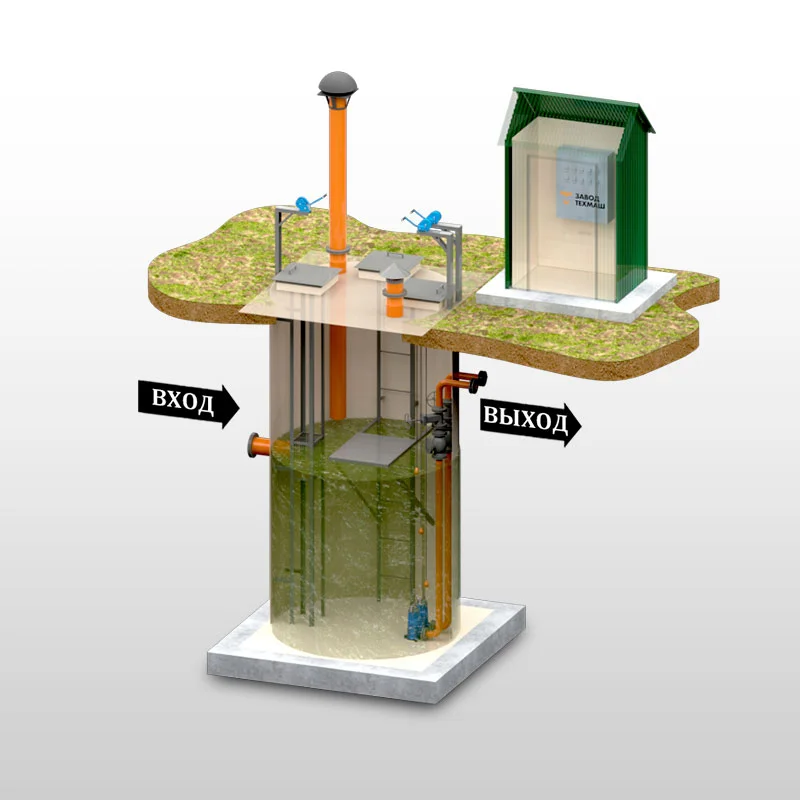
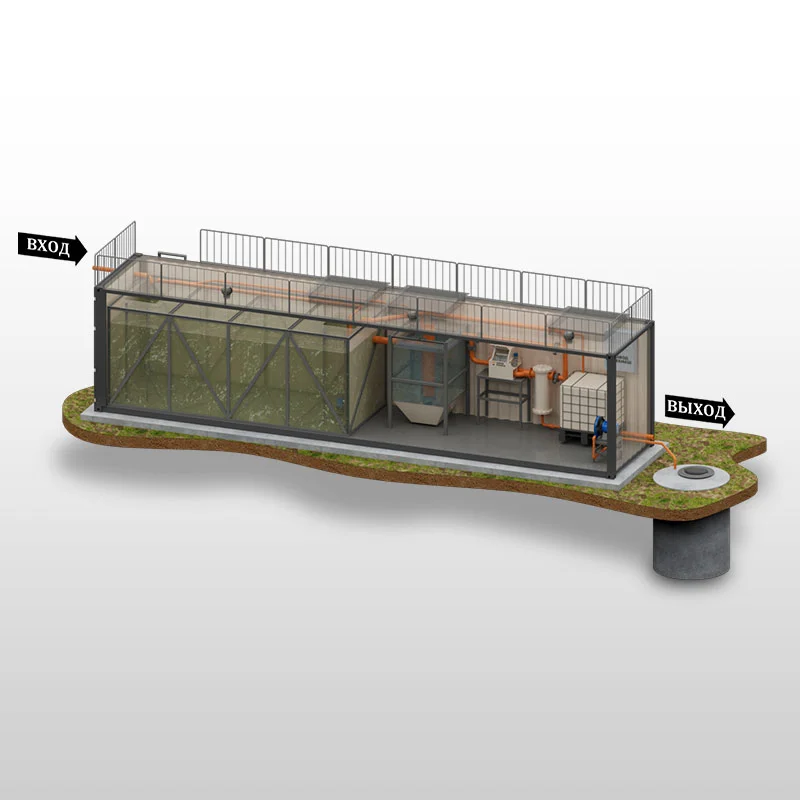
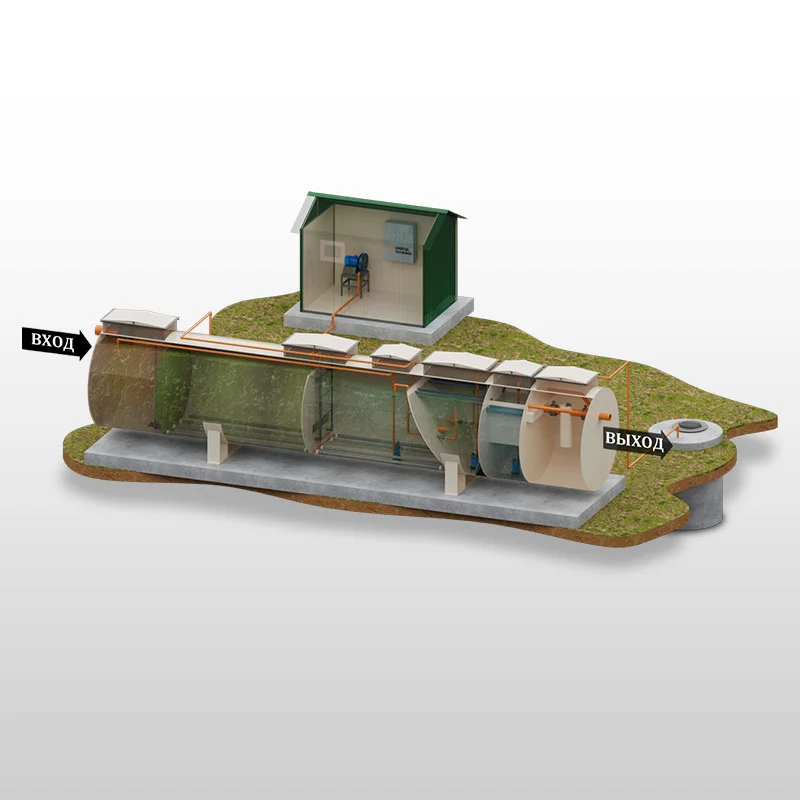
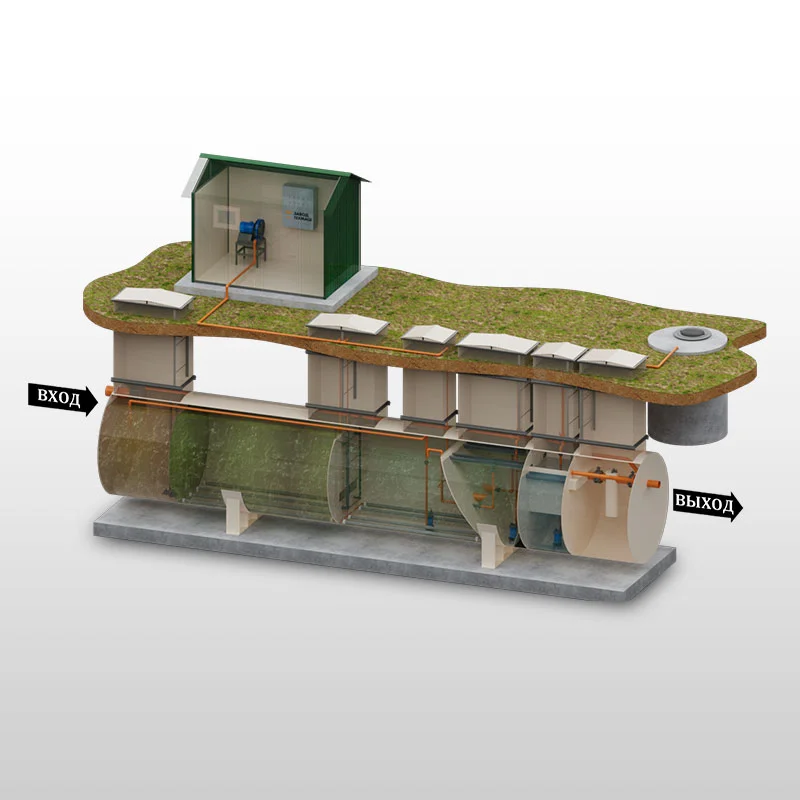
Очистное сооружение биологической очистки БиоКОС

  1. Pressure line
  2. Ventilation system of the sewage pumping station
  3. Control panel
  4. Winch for lifting the trash basket and submersible pumps
  5. Flap cover
  6. Stainless steel ladder
  7. Service platform
  8. Stainless steel trash basket
  9. Gravity line
  10. Submersible fecal pumps
  11. Float switches
  12. Check valves
  13. Wedge gate valves

MECHANICAL CLEANING

Mechanical cleaning is designed to trap garbage, sand and other pollutants. As a rule, mechanical cleaning consists of two sections: a large pollutant trap (garbage trap) and a sand trap. A manually cleaned screen, a self-cleaning UFS screen, a mechanized rake screen or a mechanized garbage trap can act as a large pollutant trap. The following types of sand traps can be used as a sand trap: a horizontal aerated or a combined sand and garbage trapping unit "Combi". The choice of the type of garbage trap and sand trap depends on the performance of the treatment facility, the amount of pollutants and technical requirements.

EQUALIZER

The equalizer is designed to equalize the flow of wastewater in terms of productivity and composition. Water enters the equalizer at different hourly rates, depending on the schedule of water use by the population. Water is supplied from the equalizer at a constant rate equal to the average hourly water consumption. The presence of the equalizer helps to make water pumping for biological treatment as stable as possible, thereby improving the quality of biological treatment

AEROBIC SECTION

After the equalizer, the wastewater enters the anaerobic section, where it is purified from phosphorus by a biological method using activated sludge from the secondary settling tank. In the anaerobic section, wastewater and sludge are constantly mixed to create optimal conditions for dephosphatation processes.

DENITRIFIER

After the nitrifier, the water enters the secondary settling tank, where the shape of the settling tank changes the direction of the flow, the water moves first in a descending flow, and then in an ascending flow, thereby separating and settling the activated sludge at the bottom of the settling tank. The settled sludge is fed by pressure to the denitrifier, and the clarified water is sent for additional treatment.

NITRIFICATION EQUIPMENT

From the denitrifier, the wastewater mixture passes into the nitrifier, where it is purified with activated sludge. Air is supplied to this section through aerators for the vital activity of aerobic bacteria. A recirculation pump with a constant flow rate is installed in the tail section of the nitrifier.

SECONDARY SETTLER

From the denitrifier, the wastewater mixture passes into the nitrifier, where it is purified with activated sludge. Air is supplied to this section through aerators for the vital activity of aerobic bacteria. A recirculation pump with a constant flow rate is installed in the tail section of the nitrifier.

AFTER-TREATMENT

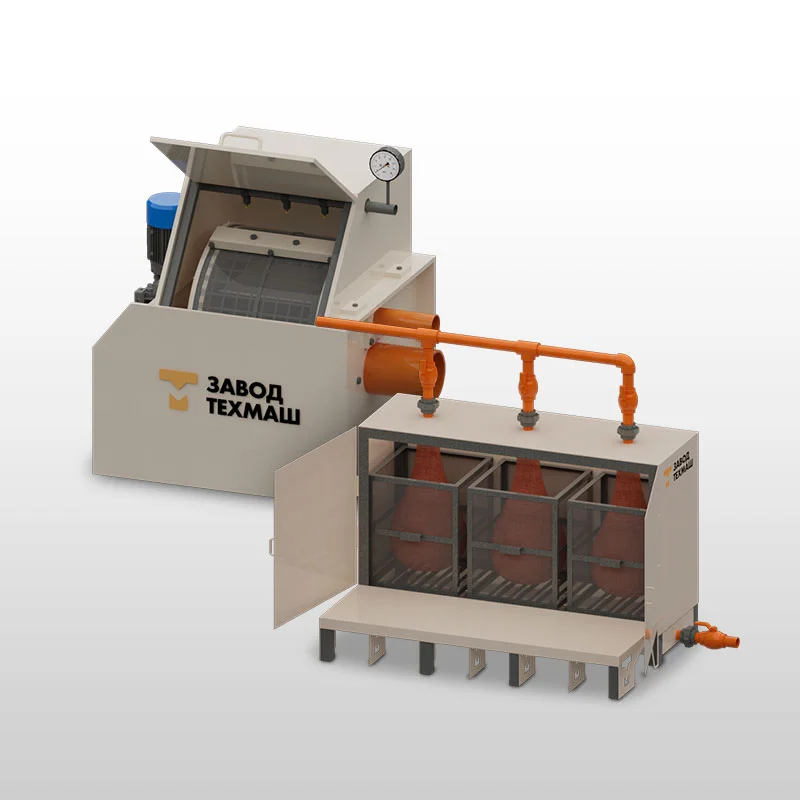
A drum microfilter is used as an after-treatment in the BioKOS treatment facilities. The operating principle of mesh drum filters is as follows: the treated water continuously enters the drum through the inlet pipe, is filtered through the mesh filter elements and enters the installation chamber, from where it enters the channel through the drain that discharges the purified water. The drum of the mesh filter is not completely immersed in water - its upper part is located above the water (approximately 0.15 of the diameter). When the filter element is in the upper position, contaminants are washed away by water jets from the washing device into the bins located inside the drum, from where they enter the drain pipe and are discharged into the sewer. The mesh drums are washed periodically depending on the degree of contamination of the filter mesh.

DISINFECTION

BioKOS facilities have two types of disinfection of biologically purified water: UV disinfection and disinfection based on sodium hypochlorite. Therefore, after additional purification, purified water passes through a block with UV disinfection lamps, in which bacteria are destroyed by saturating the water with UV light, and for deeper disinfection, water after UV purification is fed to a contact tank, where a hypochlorite solution is dosed. Each of the disinfection types covers the full need for disinfection, so there is no need to use both methods simultaneously. During operation, you can choose one of these disinfection options, or, in case of increased requirements for disinfection or the risk of failure of one of the disinfection types, use both methods.

SLUDGE STABILIZATION

The sludge stabilizer is designed to store and stabilize excess sludge, which is a container with aerators installed inside. If necessary, the sludge stored in the stabilizer will help restart the treatment facility, without the need to bring sludge from another treatment facility. Stabilized sludge is better suited to dewatering processes, so the stabilizer is an important stage in the subsequent dewatering of the sludge.

SLUDGE DEWATERING

The sludge dewaterer is designed to separate water from stabilized sludge. There are two types of sludge dewaterer: bag type and screw type. The choice of dewaterer type depends on the capacity of the treatment plant.

Погружной фекальный насос

Submersible fecal pump

Роторная воздуходувка

Rotary blower

Решётка с ручной очисткой

Manual cleaning grill

УФС решётка соочищающая

UFS co-cleaning grate

Механическая грабельная решётка

Mechanical rake grate

Шнековый обезвоживатель

Screw dewaterer

Установка комби

Installing a combi

Leave a request and our manager will contact you as soon as possible.

Feedback

лого tehmash footer
qr код tehmash
иконка адресаRepublic of Kyrgyzstan, Bishkek city, Grajdanskaya st., 29
иконка телефона+996 228 880 808 WhatsApp
иконка телефона+996 312 979 323
иконка e-mailinfo@tehmash.kg